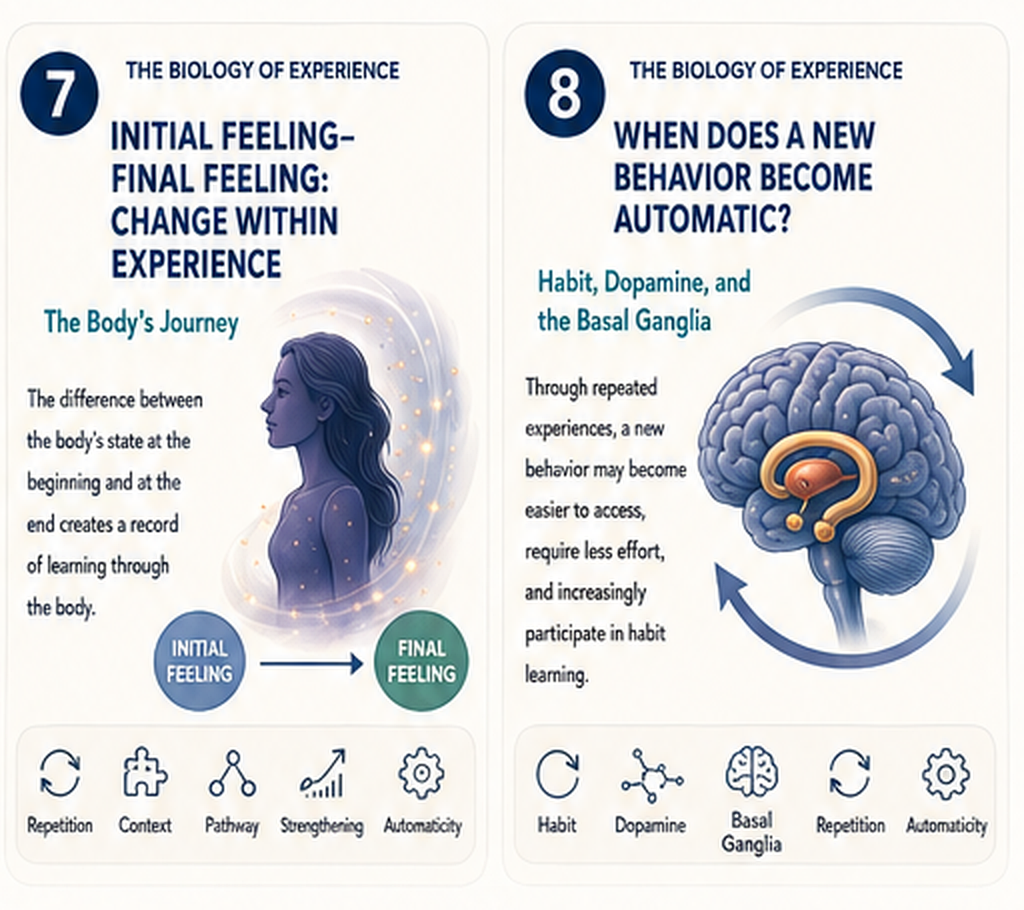
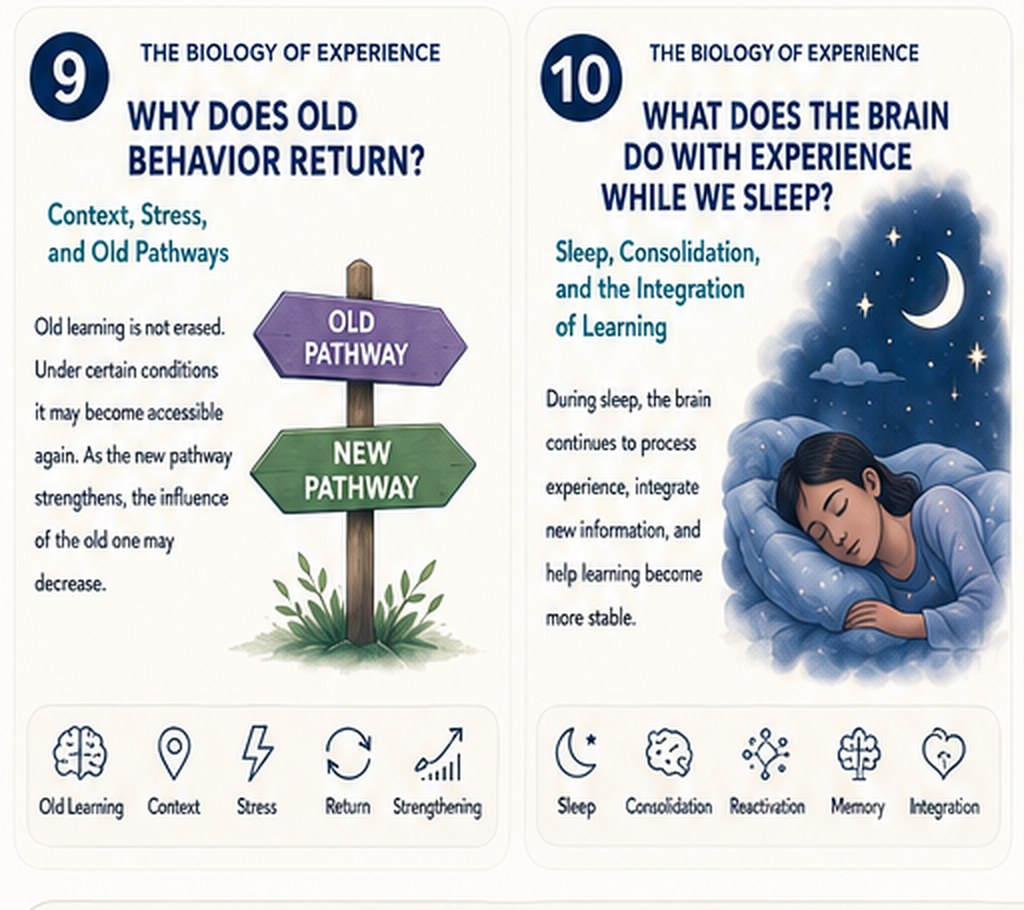
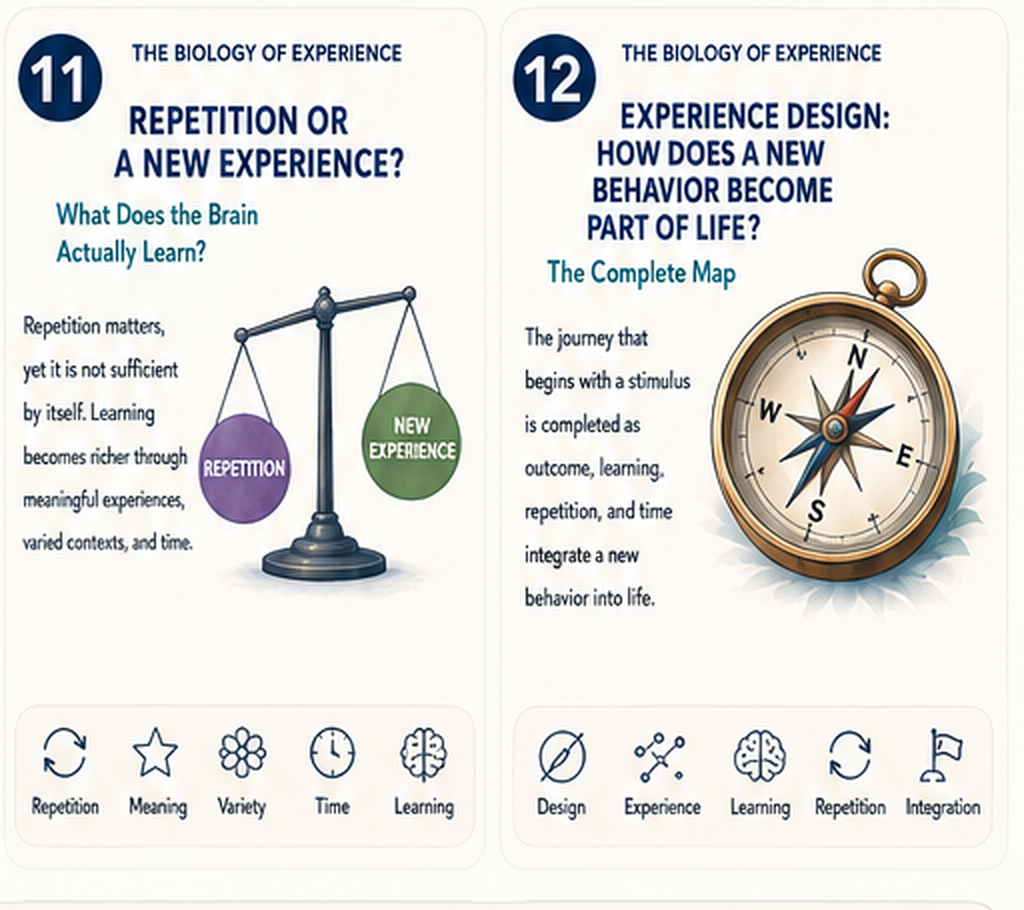


An event may end, yet its movement can continue within the body, the nervous system, thought, emotion, and behavior.
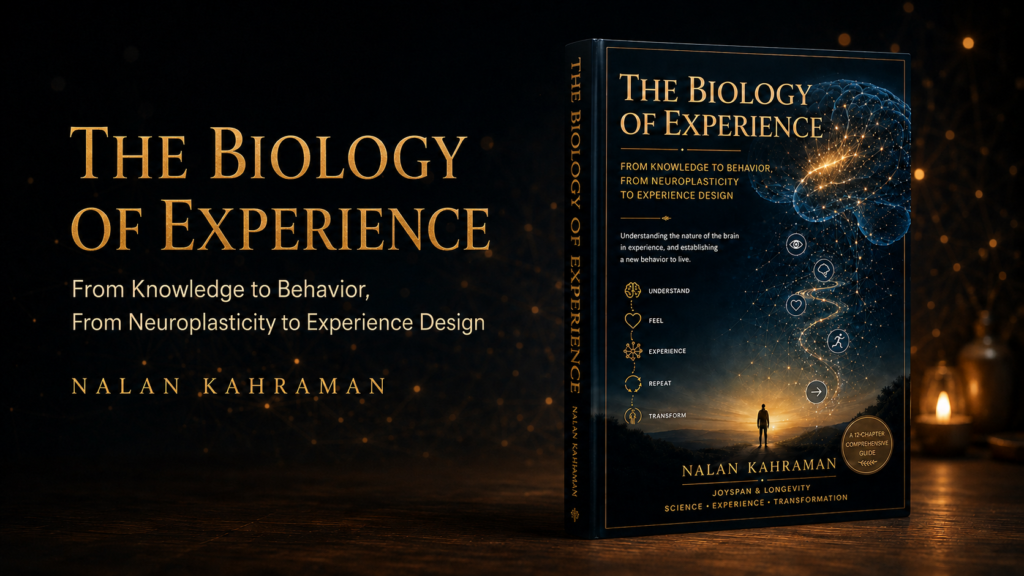
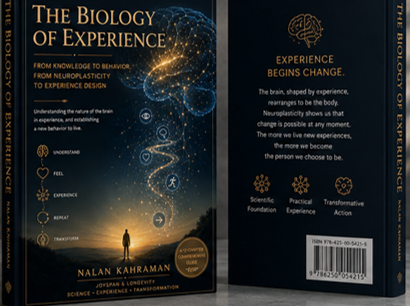
The Biology of Experience explores how experience changes the brain, how familiar behaviors become accessible, and how a new behavior becomes part of everyday life.
Through neuroscience, observation, and experience design, this 12-chapter guide invites you to look beyond what happened and discover what each experience is teaching your system.
How experience changes the brain
How familiar behavioral patterns operate
How new behavior becomes accessible in life
I. How Does Experience Change the Brain?
Chapters 1–2
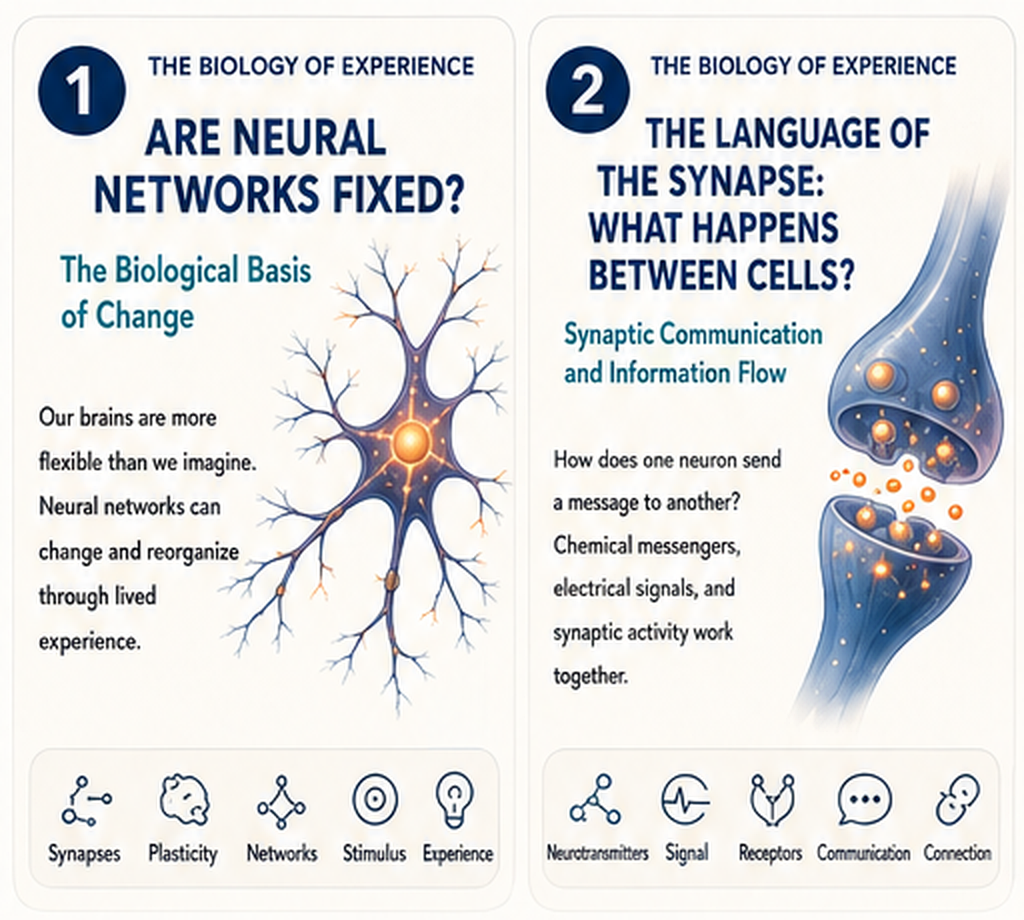
Neural networks, neuroplasticity, synapses, and the traces created by experience.
II. What Happens Within Experience?
Chapters 3–5
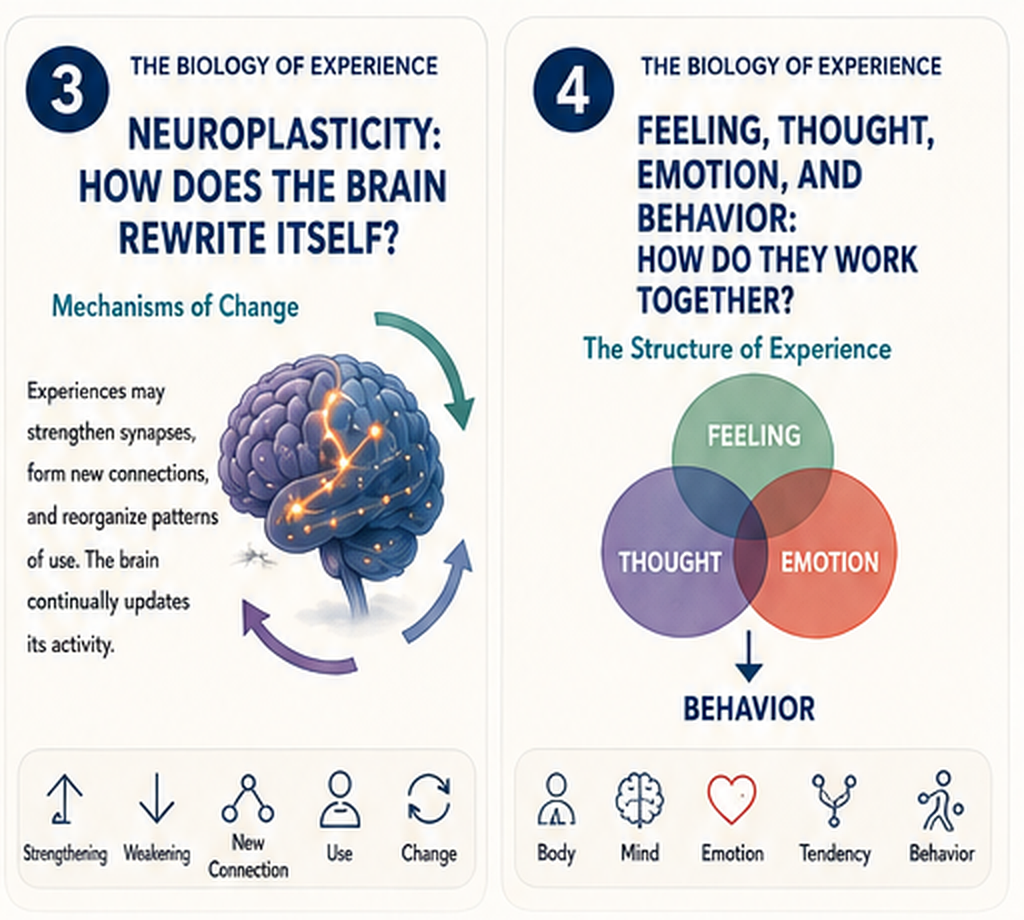
The relationship between bodily data, feeling, thought, emotion, and behavior.
III. How Does a New Experience Become Learning?
Chapters 6–9
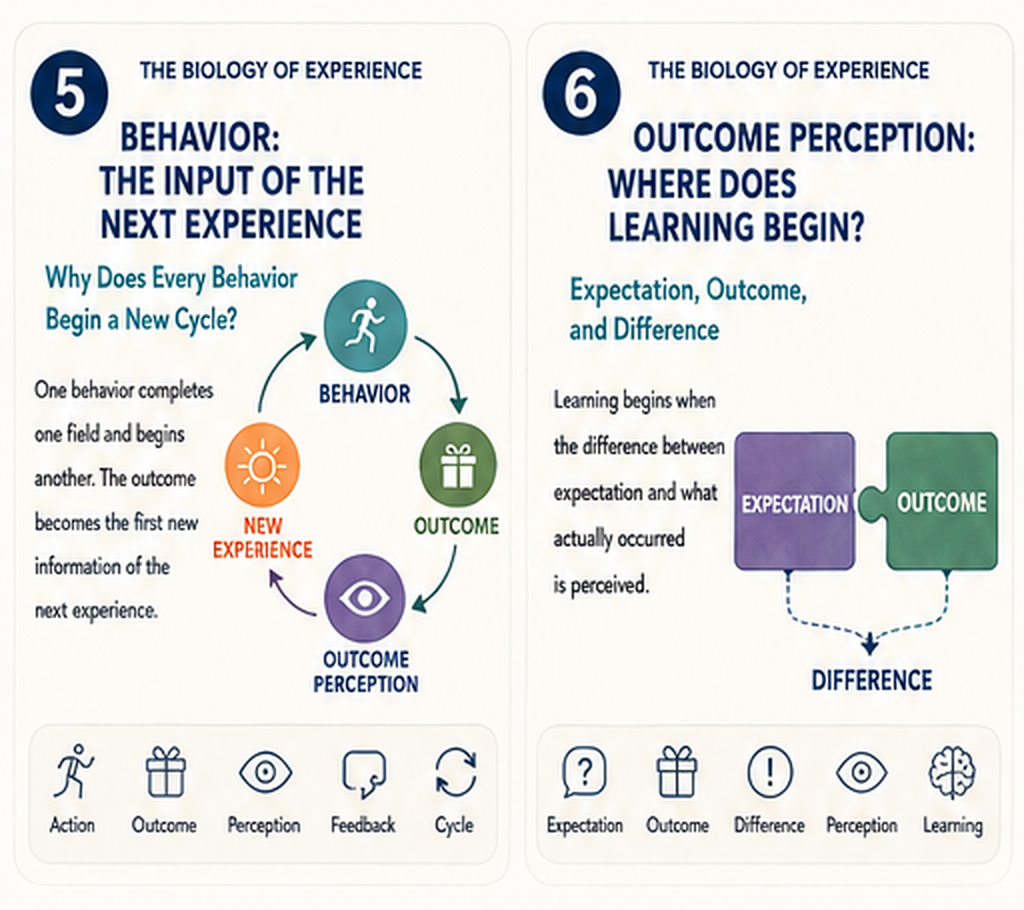
Outcome perception, dopamine, habits, and the return of familiar behavior.
IV. How Does Experience Become Integrated into Life?
Chapters 10–12
Sleep, consolidation, repetition, and experience design.
Title: The Biology of Experience
Author: Nalan Kahraman
Category: Neuroscience, Behavior & Experience Design
Language: English
Format: E-book — EPUB
Digital Edition: September 2026
ISBN: 978-625-90861-2-5
Published Independently
Place of Publication: Kuşadası, Türkiye
The biology of experience is a field of inquiry that examines how an event we encounter in life is processed through the body, nervous system, thought, emotion, and behavior; how this process becomes an experience; and how that experience influences the system in the next encounter with life.
When a person encounters life, they are already within a biological movement that is broader than thought, evaluation, and conscious decision-making. The body continuously receives data from the environment and from within itself. The nervous system processes this data, regulates the state of the body, draws on learning from past experiences, and prepares movement according to the conditions of the present moment.
By the time we consciously begin to ask, “What should I do now?”, the body has already perceived something, the nervous system has begun processing incoming data, past learning has entered the encounter, attention has been directed toward certain points, and the bodily state has changed. Thought, emotion, and behavior take shape within this biological movement.
When we treat behavior as a single correct outcome produced at the end of thought, we lose sight of an important part of experience. The biology of experience follows the movement that begins within a person as life unfolds: what the body perceives, how the nervous system meets incoming data through past learning, which thoughts and emotions arise, how behavior emerges, and what the outcome of that behavior carries into the next experience.
This movement leads us to one of the nervous system’s most fundamental functions: sustaining life.
How does the nervous system protect us?
Nalan Kahraman is a researcher and author whose work explores the relationship between the nervous system, experience, perception, and behavior.
Her books bring together scientific knowledge, observation, and experience design to examine how people understand themselves, recognize their behavioral patterns, and create new possibilities in life.
Researcher & Author
nalankahraman.com
Stay connected for new books, research, publications, and individual sessions.
Instagram
@nalan_kahraman
YouTube
@NalanKahramana
Website
nalankahraman.com
WhatsApp
+90 534 249 53 50
Email
nalankahraman@hotmail.com
a.nalankahraman@gmail.com
Contact
Get in touch to send a message.